
Half-Way Up the East Side Hill: Dr. J. B. Gully and the C.W. Cook Family

This amateur video was made in about 1960 and begins with a scene depicting how the village of Wayne, Wayne Township, DuPage County, Illinois was principally perceived by citizens of surrounding communities: a speed trap conducted by a one-man police force in the person of Constable Abner Clark.
Abner was both an elected Wayne Township Constable and a Deputy Kane County Sheriff. This dual role was necessitated to create credentials in both Kane and Dupage Counties. He served as the entire Wayne Police Force for 17 years until he retired in 1966 (and was replaced by three men). “Ab” was shot at once and beaten to a pulp by three thugs once. He wrote many speeding tickets. He also was the founder of the Kane County Clean Streams movement. He played a small part in the classic film Little Eva. Abner Clark is buried in the Little Woods Cemetery.
The film’s setting includes scenes recorded just over the DuPage-Kane County line in an area known as Dunham Woods, a part of the historic Little Woods. The old Dunham brick home was by the 1930’s the Dunham Woods Club and was the only watering hole in the vicinity. The crime depicted in Little Eva was hatched there. The complete cast, in their order of appearance, would make the film even more historically significant than it already isn’t!

The Geneva School for Girls in the 1970s.
The buildings of the Kane County Poor Farm are just visible at the upper right. The southeast quadrant of Geneva, much of it depicted in the above photo, was in tragic ways a human dumping ground. In that quadrant, at various times, were located the Girls’ School, The Kane County Poor Farm, and the Kane County Jail. Not surprisingly, this quadrant, its denizens lacking any positive attachment to the land, was nearly devoid of resident champions to protect it from the ravages of society. The result was that the Poor Farm transitioned into Midway Landfill which morphed into Settlers’ Hill Landfill, the gigantic blot on Geneva’s prairie landscape.
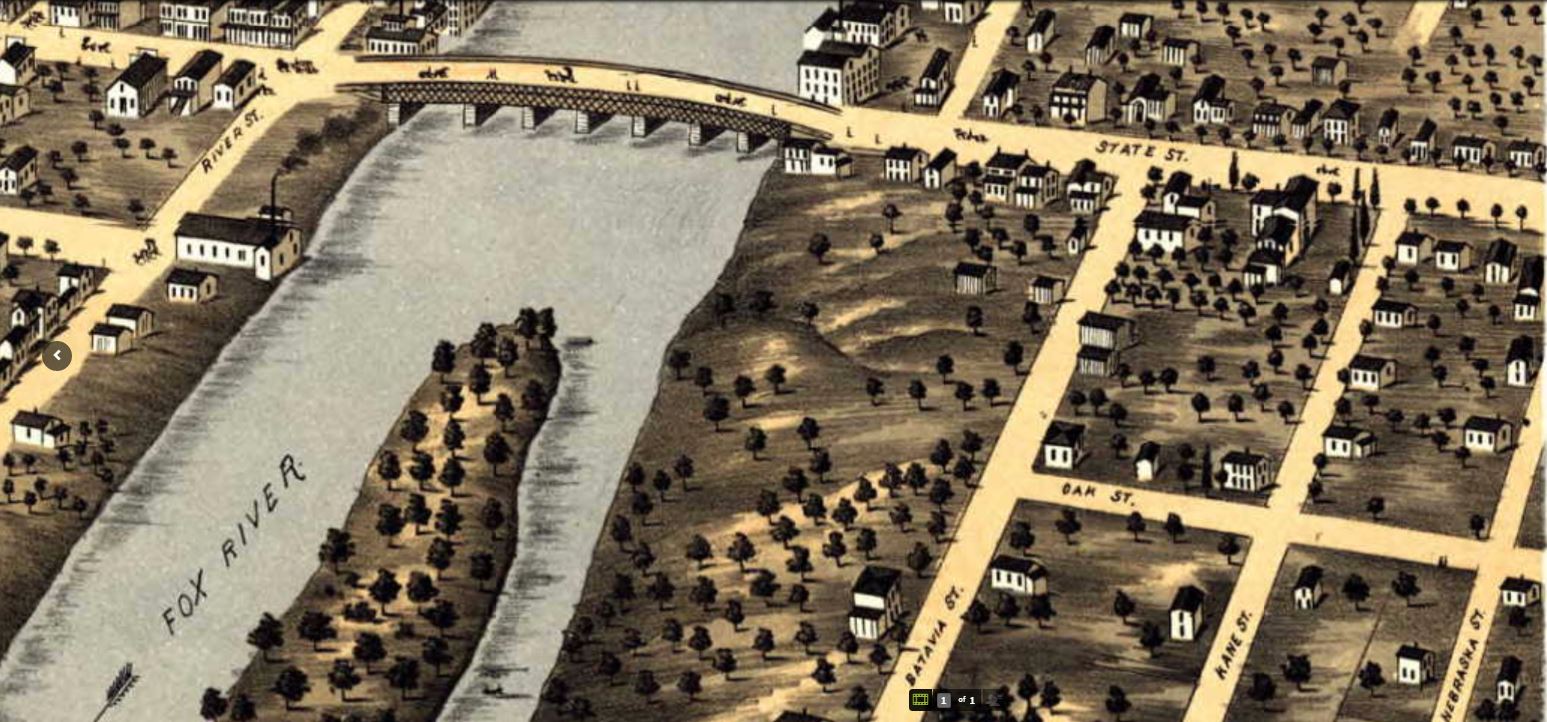
Happily, the Girl’s School campus is now Fox Run, a small gem of a residential neighborhood. Sadie Cooksey lies at peace there because of the foresight and generosity of the developer and residents who have carefully preserved and maintained the school’s small cemetery. Sarah Elizabeth Cooksey and her daughter Elizabeth Marie are buried there by the small clearing in Fabyan Woods just on the right edge of the photo. Fabyan Woods marks the northern boundary of Big Woods. Geneva, first known as Herrington’s Ford, was settled in the gap between Big Woods and Little Woods that happened to coincide with a shallow spot with a limestone bed in the Fox River that was man, horse, ox, and wagon friendly.
Sarah Elizabeth Cooksey may have lived in Fabyan Cottage, the building to the left just east of the foreground parking lot.

Photographic artist Maggie Foskett asked, “Who Was Sadie Cooksey?” The essay presented here is an incomplete answer to her metaphorical question.

The doctrine of medical practice is undergoing radical change. Community Hospital’s time belonged to the old medical doctrine of fragmentation, inefficiency, idiosyncrasy, uneven quality and high cost. The old doctrine was also highly personal and almost entirely dependent on individual professionalism. The replacement doctrine is systematic and corporate, driven from the top down based on big data and big margins. The defects of the old doctrine were manifold and obvious. Its virtues were subtle and subjective. The defects in the new doctrine are yet unclear, but troublesome.
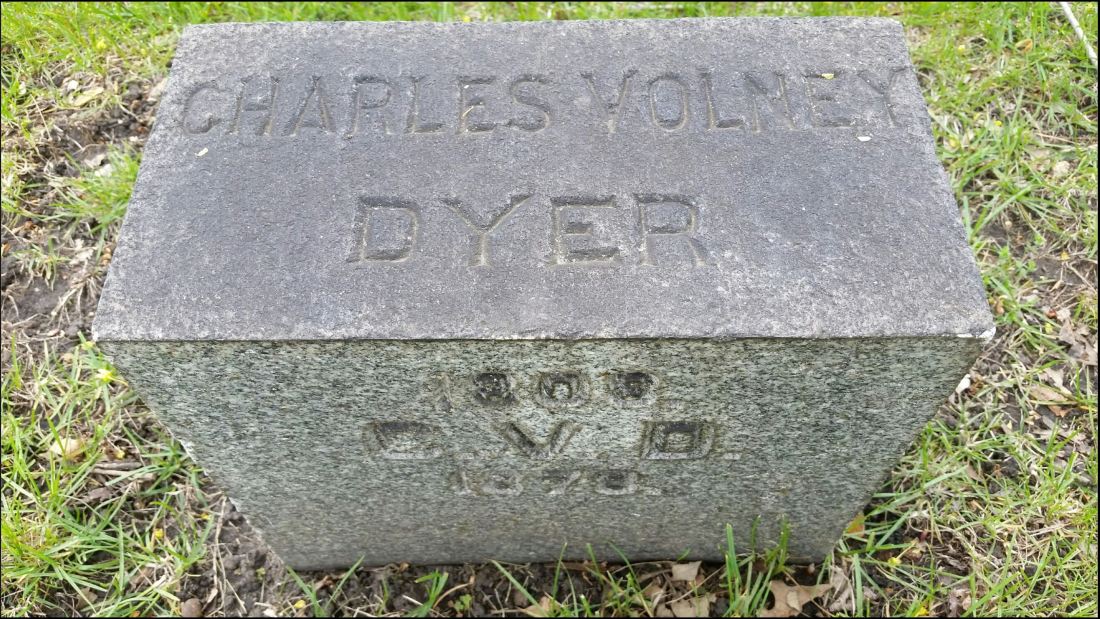
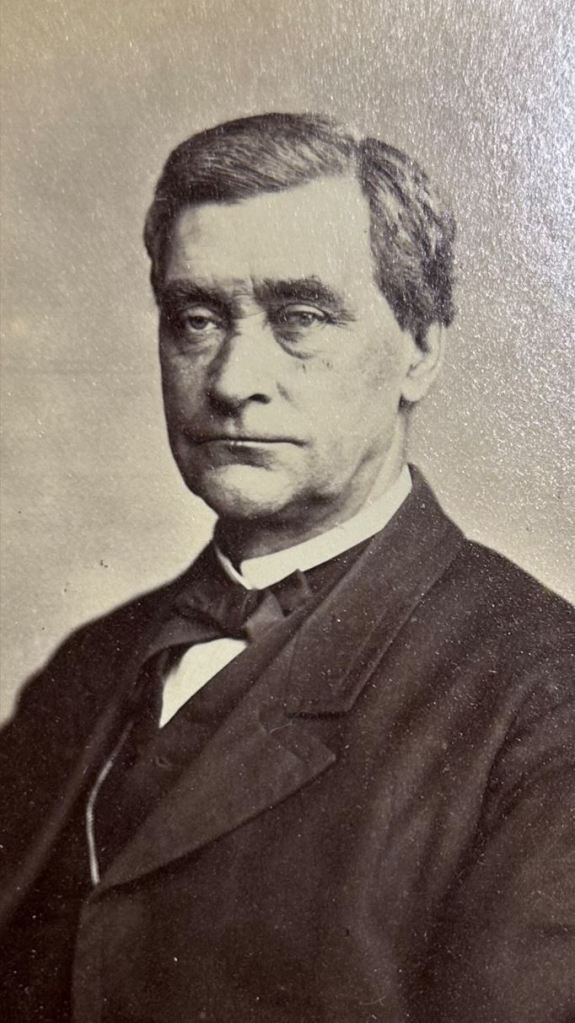
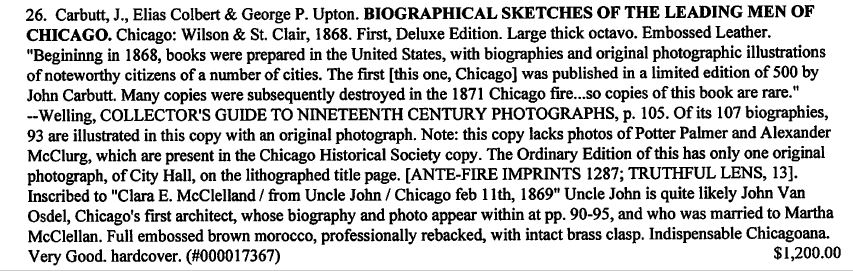
1868—Biographical Sketches of the Leading Men of Chicago (chicagology.com)

Click Here To Read: Reverend Aratus Kent – The Apostle of Northern Illinois
How many roads must a man walk down before they call him a man? Perhaps, just as the popular ballad proclaims, the exact answer is blowing in the wind. Whatever the precise quantity, Reverend Aratus Kent’s travel in quest of the salvation of his fellow man far exceeds the minimum requirement. Even at the age of 65 he often trudged alone 10 or 15 miles at a time across the treeless prairie in mid-February so that some destitute congregation would not miss a sermon on the Sabbath. The “Apostle of Northern Illinois” deserves a prominent place in the annals of the Prairie State.
Aratus Kent had a tangential connection with Geneva, Illinois. Geneva’s founder was Daniel Shaw Haight. Haight left Geneva in 1835 after selling his extensive Geneva claim to James Herrington. Haight founded east Rockford where he had discovered a mill site superior to Geneva’s. West of the Rock River Germanicus Kent claimed the land. Kent and Haight had the good sense to cooperate with each other (but not without some friction). Germanicus was the brother of Aratus Kent. Aratus travelled through Rockford and preached there. Doubtless, he was acquited with Haight. Kent founded Rockford College which was the women’s school that was created in parallel with Beloit College for men.
Jane Addams was a Rockford graduate, Nobel Prize winner, and classmate of Hannah Wells of Geneva, whose Geneva home Jane visited. Another Rockford student of the time was Julia Lathrop, Addams’ later collaborator at Hull House, who, along with Geneva’s Julia Harvey, was instrumental in the founding of the Geneva School for Girls. Aratus Kent would have been proud!

Thanks for joining me!
Geneva Notes (genevanotes.com) contains mostly one man’s opinions about various things related to Geneva, Fox Valley, Kane County, Illinois, and beyond.
Good company in a journey makes the way seem shorter. — Izaak Walton
 Rod's Ramblings and Ruminations